
Where it begins, the Potteries, Stoke-on-Trent
In the historic pottery city of Stoke-on-Trent,
a tradition of craftsmanship stretches back generations.

Designed by Carmen Lyngard
OUR FOUNDER
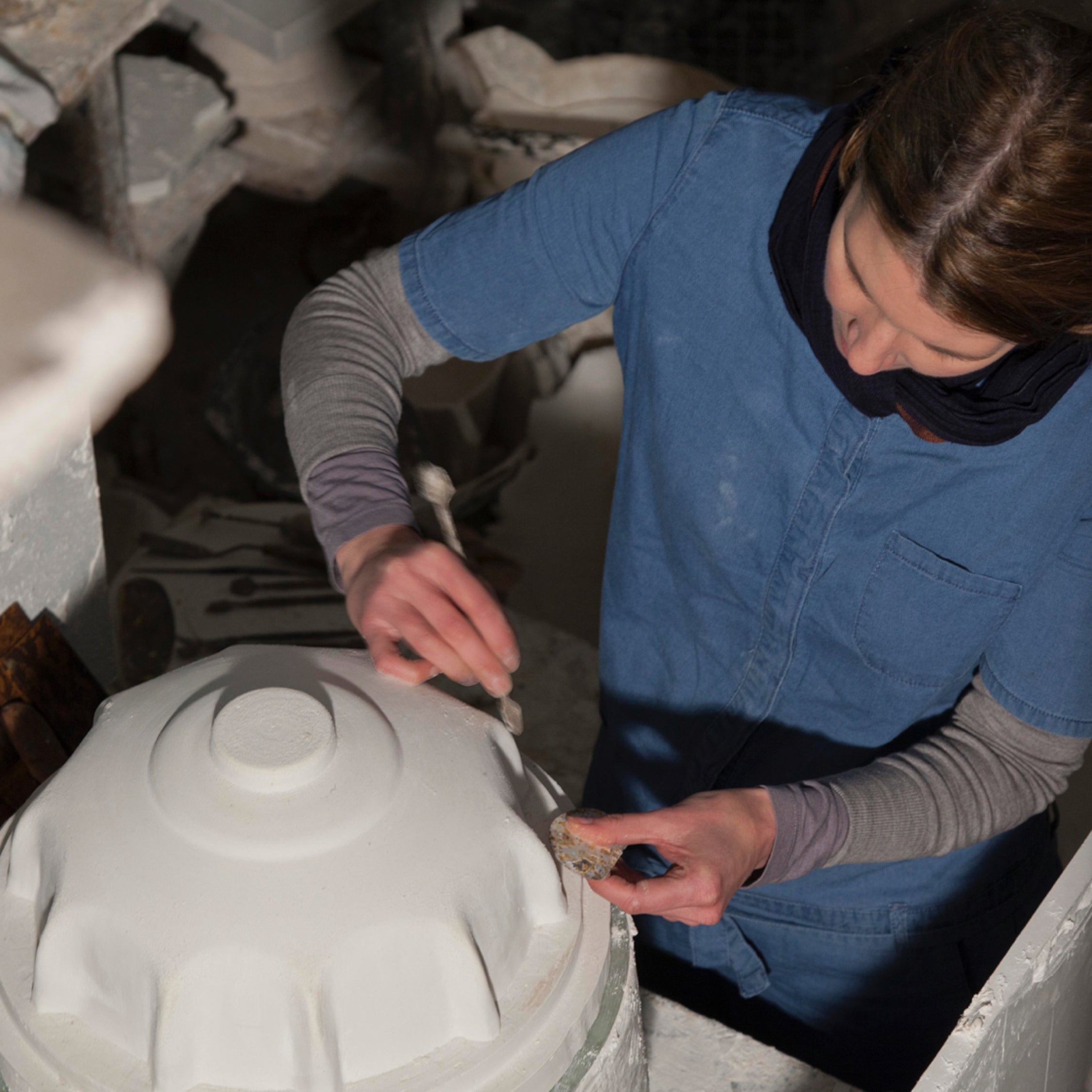
Each Lyngard light begins as a hand-sculpted form by designer Carmen Lyngard. Working directly with clay in the Stoke-on-Trent studio, Carmen shapes every design with a focus on proportion, light and translucency — ensuring each piece feels both timeless and quietly distinctive.
This hands-on approach remains at the heart of Lyngard today.
From clay to light
Craftsmanship
Every Lyngard shade begins life as a sculpted form in plaster. From this original prototype, moulds are produced and each shade is slip-cast in fine bone china — a material prized for its strength and remarkable translucency. Once illuminated, the porcelain itself begins to glow.

Shaping the form
From the original sculpted prototype, plaster moulds are produced to capture every curve of the design.
Each shade is then slip-cast in fine bone china, continuing a ceramic tradition that has defined Stoke-on-Trent for generations.

Slip-cast in fine bone china
The process
Once the moulds are prepared, liquid fine bone china is poured by hand to form each shade.
As the clay settles against the plaster mould, the form slowly takes shape. After setting, the mould is tipped and the newly cast shade is carefully removed to continue its journey through drying, firing, and glazing.
It is this careful process that gives Lyngard shades their strength, purity, and distinctive glow.
Design with purpose
From the curve of the shade to the glow of the fine bone china, each detail is refined to balance beauty, light, and craftsmanship.

Hand-painted details

Crafted in fine bone china

Soft sculptural light

Designed to glow
Materials that matter
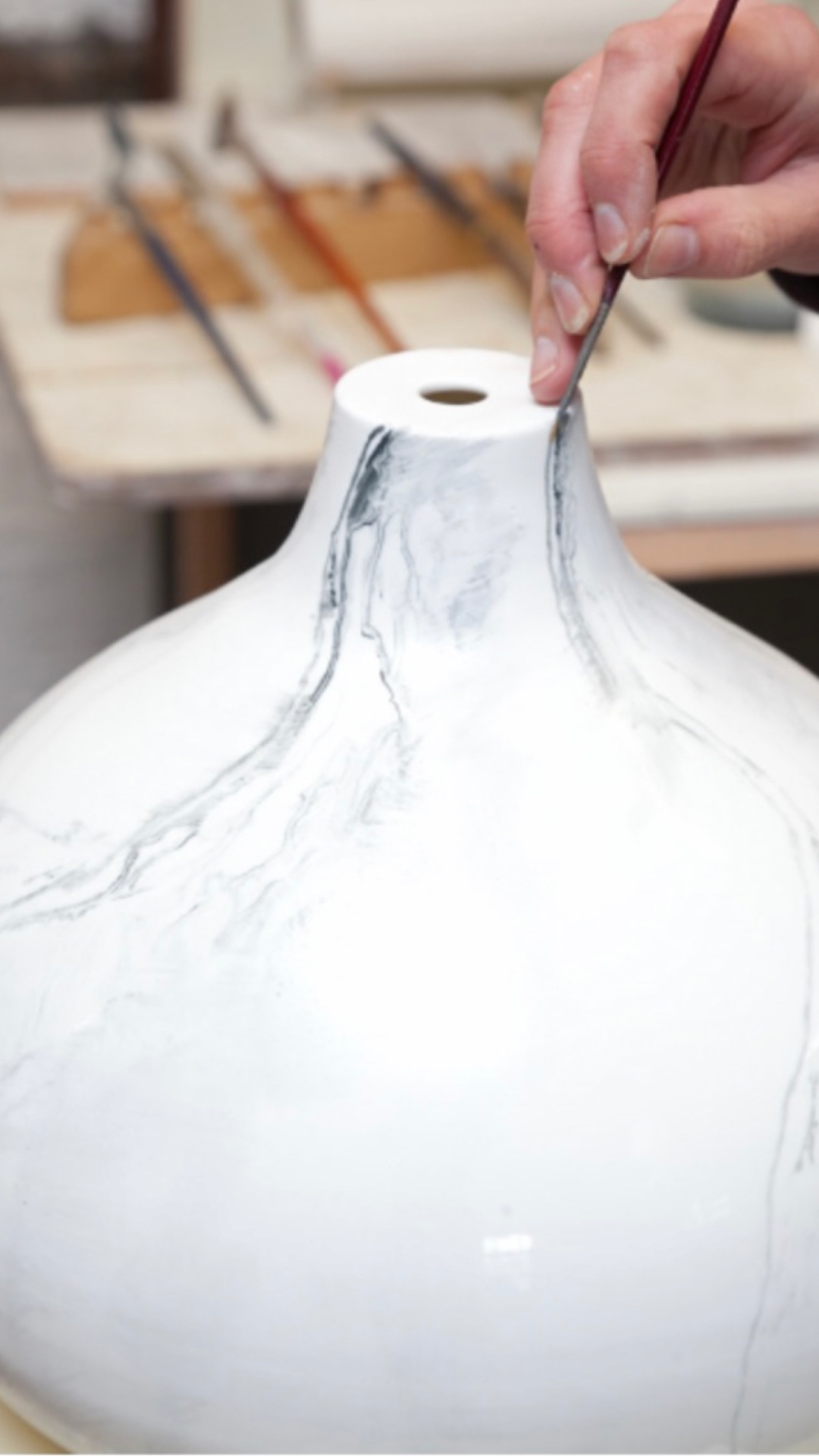
Each shade is slip-cast in fine bone china — prized for its strength, translucency and soft glow — and paired with solid brass fittings, hand-applied finishes and fabric braided cable.

Fine bone china
Hand-applied finishes

Fabric braided cable

Solid brass details

The glow of fine bone china
When illuminated, fine bone china reveals its quiet magic.
Unlike glass or ceramic, the material diffuses light gently through its surface, creating a soft, warm glow that feels both refined and atmospheric.
Lyngard lights are designed not simply to illuminate a space, but to shape the way light is experienced within it.

Sustainability
Lyngard Lighting
Sustainability at Lyngard
At Lyngard, sustainability begins with craftsmanship. By creating lighting designed to last for generations, we believe we take the most responsible approach to design and manufacturing.
Our approach
At Lyngard, sustainability begins with craftsmanship. We believe the most responsible products are those designed to endure — thoughtfully made, carefully sourced, and built to last for generations.
Each Lyngard light is handcrafted using durable materials including fine bone china and solid brass. These materials are chosen for their strength, longevity, and ability to age beautifully over time. By creating products that are designed to be kept rather than replaced, we aim to reduce waste and encourage a more considered approach to lighting and interior design.
Sustainability for us is not a single initiative but an ongoing commitment — influencing the materials we select, the partners we work with, and the way we power and operate our factory.
Responsible materials
Fine bone china
Our light shades are slip-cast in fine bone china, a ceramic material known for its strength, durability, and distinctive translucency when illuminated. The clay used to produce this material is composed of naturally occurring minerals, including high-quality kaolins and feldspars.
Fine bone china allows us to create shades that appear delicate while remaining robust in everyday use, helping ensure our lighting continues to perform and age beautifully for many years.
Solid brass components
Our lighting fittings are manufactured in collaboration with trusted local suppliers who share our commitment to responsible production.
The solid brass components used in our fixtures contain approximately 78% recycled metal content, with our supplier working towards increasing this to 90% recycled content by 2030. Brass is also highly durable and fully recyclable, making it well suited to long-lasting lighting design.
Certified electrical components
All electrical components used in Lyngard lighting meet recognised safety standards. Our braided electrical cables are sourced from specialist manufacturers in Northern Ireland and are compliant with UKCA, CE, and UL certification requirements, ensuring they meet the necessary safety standards for both UK and international markets.
Local craftsmanship
Lyngard is based in Staffordshire, the historic centre of British ceramics. Being located within this long-established manufacturing region allows us to work closely with skilled suppliers and specialists across the ceramics and metalworking industries.
This local network supports responsible production by enabling shorter supply chains and maintaining traditional craft skills. Our glaze supplier, for example, produces ceramic glazes using non-toxic and environmentally considered formulations wherever possible.
Packaging and responsible shipping
We regularly review our packaging to ensure it protects our products while reducing environmental impact wherever possible.
Our boxes are FSC-mix certified, meaning the paper fibres used come from responsibly managed forests and recycled sources. The boxes are designed to be strong enough for reuse and are fully recyclable.
To protect our lights during shipping we use kraft paper made from 100% recycled post-consumer waste, which is recyclable and biodegradable. Where bubble wrap is required for additional protection, it contains recycled material and can be reused or recycled.
We encourage customers to reuse packaging where possible before recycling.
Energy and carbon awareness
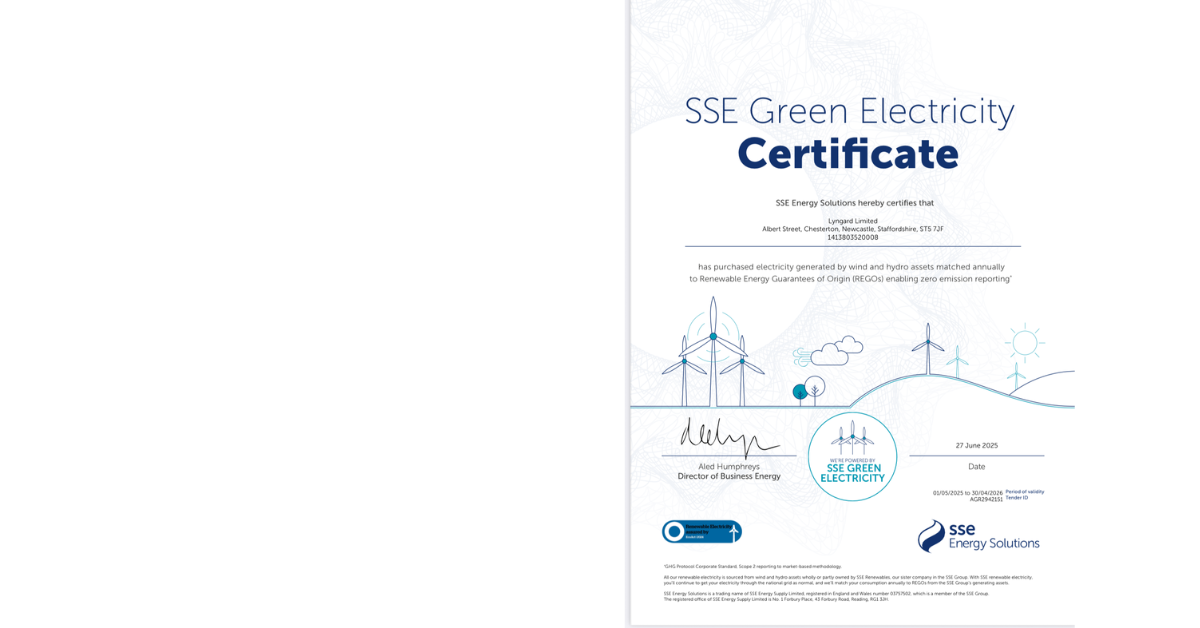
Electricity used in our workshop and kilns is supplied through SSE Green Energy, which is matched with renewable generation from wind and hydroelectric assets through Renewable Energy Guarantees of Origin (REGOs).
We also use carbon-neutral shipping services with UPS to help offset emissions associated with transporting our products.
Measuring progress
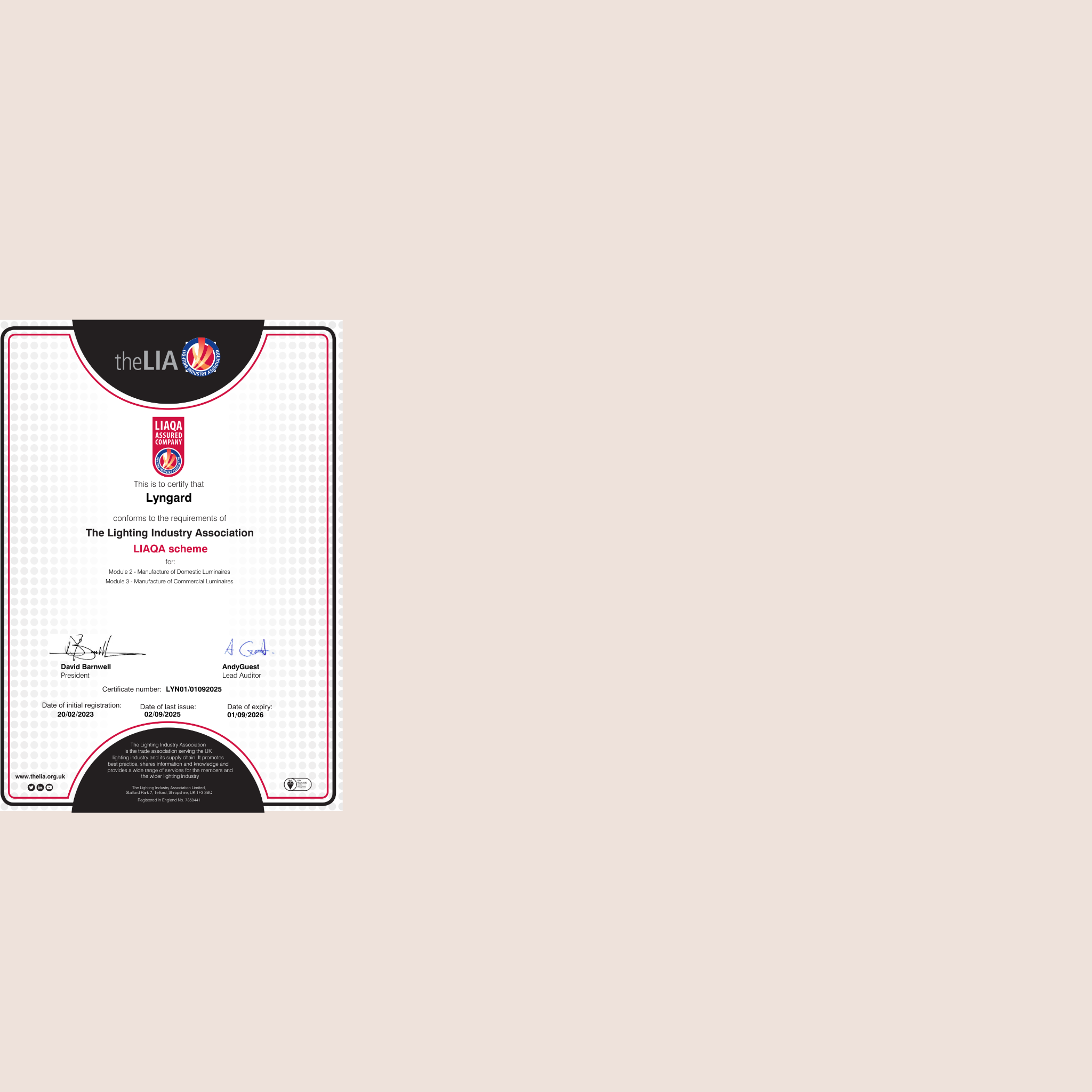
Understanding and improving environmental impact is an ongoing process. Through training with the Lighting Industry Association, we have undertaken a Circular Economy Assessment to evaluate our products, materials, and manufacturing processes.
This assessment considers factors such as product longevity, material use, manufacturing methods, and end-of-life recyclability, helping identify opportunities for improvement as our business continues to grow.
Looking ahead
We recognise that sustainability is a continual process of improvement. As Lyngard develops, we remain committed to refining our materials, increasing recycled content where possible, reducing waste, and working with partners who share our commitment to responsible production.
Our aim is simple: to create lighting that is both beautiful and responsibly made — products designed to be valued, maintained, and enjoyed for generations.